Showing posts with label NGO. Show all posts

Wednesday, 30 August 2017

Beggary: A Peril To Society


People who are in extreme situation of need and poverty are called beggars. The state of being a beggar is called beggary. Beggary is a serious threat to the development of a nation, one of the dark faces of the Indian economy, this issue needs serious and urgent reform. 

CAUSES

The main cause of beggary is poverty. Lack of money to sustain their livelihood drives these helpless disenfranchised people to go out on the streets and beg for money. As per the Census 2011, there are 3.7 lakh beggars in the country. Lack of proper education and adequate skills are also strategic contributors to poor people resorting to beggary. This also has a dangerous impact as these beggars completely rely on begging as a source of income and remain uninterested in finding alternative sources of income. This has grave consequences for a developing nation such as India as instead of engaging in meaningful productive work, millions of people of all gender and ages are being wasted away with untapped resources which can derail a country’s progress in many ways. Beggars have become a menace to the society and now they have begun forcing their kids to do the same. A cruel aspect of begging is that they sometimes even resort to mutilating body parts to garner sympathy to earn more. It hinders the development of the country as well as its women and children. 

CHILD BEGGING

Nowadays child beggars have become very conspicuous. We see hundreds of children out on the streets every day begging for money. This is a part of a very dangerous racket run by unscrupulous men that use unsuspecting vulnerable children to fulfill their greed. This has now turned into a very profitable money minting business by drug cartels that kidnap little kids and force them to go out on the streets and beg for them only to pocket all the pennies they spent all day out in the sun begging for. These children are becoming victims of a heinous crime. These kids are starved, beaten, tortured and sometimes their limbs are cut off to garner the sympathy of passersby. The only way this can stop is if we all just stop handing out money. There is also the herculean task of changing attitudes towards begging, which is often accepted as a way of life for the poor and worthless. 

The government needs to ban the practice of begging on the streets. There should be an initiative by the government to provide these homeless people with homes and meaningful jobs. Under the Juvenile Justice (Care and Protection of Children) Act, 2015 child labor and child begging are prohibited, child cruelty is also a punishable offence under this act. 

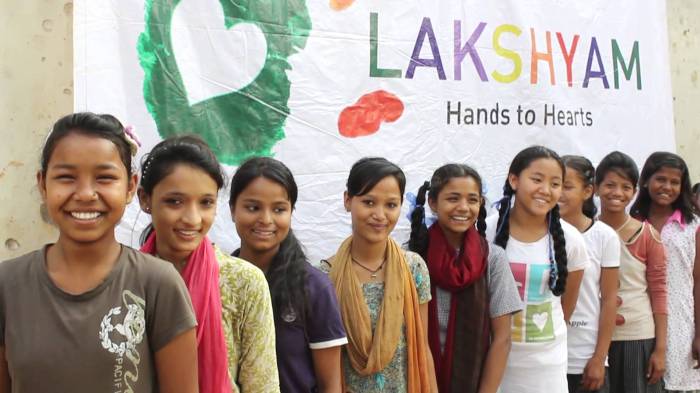
Lakshyam NGO- Our purpose of existence is to enhance the lives of disadvantaged children and women, and to offer a positive direction and a healthier approach towards life. Lakshyam continues to vow a credible, honest, transparent and accountable organization that devotes itself towards a privileged future.

Monday, 7 August 2017

Women Empowerment: Social and national profit


Women in the society have remained under the veils of culture for a longer than they should . They have been agreed or they have been forced to agree to remain has such. But it is high time they understand their true value and potential. To bring out the change they want first they must be the change. 

The topic of women empowerment is possibly one of the most controversial one because it is often misunderstood by both men and women. India is famous for having patriarchal society where women have been denied their rights since the ancient times. And they have deliberately agreed to this submission. Even in this generation the passive agents of patriarchy are also women. 

Women empowerment refers to the creation of an environment where they can make their decisions and have the freedom to do it without having any fear of judgement. It refers to increasing and improving the social, economic, political and legal strength to the women and to make sure they live as 
  • Freely live their lives with the sense of self-worth, dignity and respect. 
  • Have complete control of their lives both within their home and outside. 
  • To make their own choice and decision.
  • Have equal rights to participate in social and public activities 
  • Have equal social status in the society. 
  • Equal right for social justice 
  • Economic and financial choices determination. 
  • Equal right in work place and right to education. 
  • Right to choose the spouse. 

Improving education for women helps raise their levels of health and nutrition , and self confidence. It enables them to find a job, engage in public activities such as debates and make demands to the Government. In short education empowers women to make choices that improve their own standard of the family. Women these days have started realising their importance of themselves and are already take a step ahead for example from grass root level to the highest top. In rural settings large number of Self Help Groups can be seen. Apart from them ASHA workers ICDS workers GNMs ANMs are the areas where women are solely required.
The barriers to women empowerment are mainly cultural and social norms that prevent them to take adequate measurement for their development. Many women feel these pressures while others become accustomed to being treated inferior to men. Apart from this, gender discrimination, harassment (physical, mental & psychological) and violence are major barriers. According to ILO 52% of women have received some form of sexual violence.
In different stages of 5 year plans many schemes have been taken up for the purpose of women empowerment and development such as, 


Women empowerment isn’t something that can be given to a person but it is them who have to realise their self worth and importance. Even with all the facilities provided a woman can be withheld from being independent. The goal is to bring change in the mentality of the victims and to make them realise that they should seek their rights. Because an educated boy will take care of a family, educated girls brings change to the nation. One of the major and most empowering things in recent days has to be the abolition of teen-talak. It is not only disgraceful but also inhuman. This ritual has been going on for hundreds of years and women have finally raiser their voice against it this marks as a historical change in the history of development and empowerment of women.

Thursday, 27 July 2017

Woman and Child Development by Lakshyam NGO in Delhi

The condition of women in India as well the rest of the world personifies pitiful. Lakshyam NGO in Delhi is working for Woman and Child Development. Give your exceptional support to us so we can work together for the most vulnerable and make the big difference to the life of a poor women and children.

Woman and Child Development by Lakshyam NGO in Delhi


Please contribute for the upliftment & empowerment of poor women in India. 

Contact us LAKSHYAM SCHOOL
Add: A 53 , Ground Floor,Near Kaushambi Metro Station,
Indirapuram, Ghaziabad, Uttar Pradesh,
India
Ph: 9540780002
Email: support@lakshyam.co.in
Website: http://www.lakshyam.co.in/rooh-women-welfare-program/

Tuesday, 28 March 2017

Child Welfare Programmes in India


A country with a population of more than 1.2 Billion, of which more than 27 percent lies below 14 years of age, significance of education and future employability is something that several government and non government organizations have picked up. Many Child Welfare Programmes catering to education, health and hygiene, income generation and inclusive growth like Sarva Siksha Abhiyan, Right to free and compulsory Education, mid day meal and so on and so forth have been rolled out by the government of India. However the enrolment and retention are the two major drawbacks that these programmes are currently facing. Owing to dependency ratio as high as 52 percent, children are forced to drop out of schools to financially support their families by begging, working as domestic help or at times working in environment as hazardous as cracker manufacturing. This is the major lacuna that NGOs like Lakshyam are targeting at; by providing holistic development of children. Lakshyam is working religiously to provide basic education to student in order to get them enrolled in formal schools. Apart from proving basic education in subjects like Hindi, English and Mathematics; they are providing various skill development trainings like Bottle decoration, diya decoration, handicrafts made out of waste material and so on so forth. This part time source of income let this underprivileged section to continue with their education. Biases in enrolment are another issue that has not been given enough substance. State of female enrolment and retention is all the more dismal due to the societal biases and high masculinity index of the country. Welfare schemes like beti bachao beti padhao have been initiated by the government; however a lot of work needs to be done at the ground level to change the mindset of people. 

With India set to become the country with largest population in working age, instead of reaping the benefits of demographic dividend, it may fall is the vicious circle of unemployment and lowering demand due to high proportion of jobs in unorganized sector. Hence it is imperative to take immediate steps to restructure the Child welfare programmes in India, as any thoughtful measure taken to improve the life of children at this stage would have impact on the generations to follow. Also under the UNDP Millennium development goal 2 and 3 primary education and gender equality & women empowerment respectively are the two issues that India as a country is committed to. Hence programmes needs to be (re)structured after rigorous in-sighting, one needs to know all the stakeholders and their role in decision making process. Programme touching all the decision making point is essential to (re)structure the welfare programmes in India as decision making is collaborative. Last but not the least is effective implementation, which is not meagre creating awareness but continuously, improving the system based on the 360 degree feedback that you get. 

With its outreach programme across different states of the country, Laksyam intends to involve all the stakeholders from children to parents to society at large. It has brought together the strata which are far from each other in terms of opportunities and resources with its Toy Library Programme. This has been a perfect example of uplifting the JJ Bastis of Vasant Kunj; which are right in the middle of cities yet so far. Seeking a society with equitable resources and opportunities is essential for reaping demographic dividend and in order to attain equitable society, the need of the hour is effective Child welfare schemes in developing countries like India.

Friday, 27 January 2017

Working for a Better Society: NGO for Children in Delhi

Working for a Better Society NGO for Children in Delhi


There are many NGOs in Delhi working for the welfare and proper development of children in need, though ‘NGO’ may not be the first word that crops up in your mind when you think of the metropolitan city, with its colossal buildings, historical monuments and the crowd that seems to be always-on-the-go. Why children? It is because they are the ones who will decide the circumstances of the near future. This is why the fact that more than 12 million children in India are the victims of child labour even today, will shake up anyone; this is apart from those facing abuse and trapped in the trafficking business. NGOs all over the country have been waging a relentless war against such a malady. In Delhi as well, there are thousands of NGOs operating, functioning, managing and running for the welfare and development of children. They have multiplied in recent times now that there has been an increasing interest of people in general to contribute to the society in any way they can. Though each NGO has its own history and principles, all in all, they are inching towards some common goals and objectives. 

  • To address the educational needs of children

    With the 9.897 million population in Delhi (as per the Census Survey of India 2001), many parents are not in a standing to provide for even the basic needs of their children, a major one including education. Instead these children will be seen working along with their parents in the roadside stalls, at traffic signals or for someone else in factories or as a domestic help. Some of these children who do go to schools do not get the quality education that they deserve. Some don’t even have even proper clothes to wear, which becomes life-threatening in the numbing cold of Delhi. As some wise man said, “pen is mightier than the sword”, that is what these NGOs understand the best. 
  • To give children a conducive and progressive environment for their development without any short comings

    For children to expand their knowledge in an appropriate manner without any hindrance, it is essential to provide them with a nurturing environment. 
  • To provide a forum for the exchange of ideas on the social, cultural and educational conditions of society

    Children, especially those who are under-privileged and exploited cannot by themselves bring themselves out of their miserable conditions; NGOs act as the voice of these children. 

  • To take care of the health of the under-privileged and under-nourished children by providing for nutritional food

    Many of us who are privileged don’t even think twice before ordering something extravagant or even throwing away the food that was ‘extra’; but there are also people who are not able to afford even three basic meals for their children a day. So it is not that one HAS to work for an NGO to contribute to the society; one can also give in a way by resolving to eat only the required amount and not to waste food 
  • To collaborate with other NGO's working towards similar goals

    As the saying goes, “two heads are better than one”, with the coming together of NGOs with similar agenda, their voice gets stronger and more work gets done and objectives achieved. 
  • To eradicate the evils of child-abuse, trafficking and child labor 

  • To influence the laws of the country to protect the rights of children

    Because the children of today are the future of tomorrow, it is pertinent to achieve a child-caring society that respects their rights. 

Lakshyam NGO Delhi
Lakshyam NGO- A NGO for Children

Among all such NGOs, Lakshyam is one that since its inception in 2004, has established itself for mankind at large, catering to the impoverished sections of the society and fighting for their rights, so as to one day bring about a more egalitarian world. 

It is registered as trust under the Indian Trust Act 1882 vide registration No. 393 dated 3rd Feb 2012 with amalgamation of Lakshyam, a society; registered under Societies Registration Act 1860 vide registration number 440 dated 23rd March 2005. It is engaged in a number of social welfare activities like child welfare, health, education and women empowerment

Over the years, Lakshyam has expanded and strengthened its inventive programs and initiatives to bring a practical turnaround in the present social structure. The activities that the organization is actively involved in are various camps, workshops and programs that are designed to cater to the need-based approach. It has two centres in the NCR region- Vasant Kunj and Ghaziabad; but it is currently working in 11 states across India and recently commenced its international chapter with Scotland. Two stores in Aberdeen, Scotland showcase their handcrafted products which has definitely given us a global platform. 

Thus, in the metropolitan Delhi, with all the rich kids and their glitz and glamour on one side and the destitute children struggling for even a decent meal, there are many NGOs striving to bring down the gap between the two.

Tuesday, 7 June 2016

Why Should I Volunteer for Charity?

Despite constant claims made by the economists and international organizations all over the world that India is truly on a recovery mode, we cannot simply ignore the hard head-hitting facts which do not portray India in a very positive state. A large portion of India’s population remains impoverished and in need of basic human necessities. 70% of the population still has limited access to housing and clean water. With an estimated 6 doctors for every 10,000 people, the people of India also continue to face severe public health problems on a daily basis...


Article Source:  Why Should I Volunteer for Charity

JJ Bandhu Camp in Delhi Undertaken by Lakshyam NGO from Lakshyam NGO on Vimeo.